A homeless man approached me from behind to my right, making his way across 40th Avenue from under the 580 overpass. He was wearing what looked like flip-flop versions of hospital slippers, his bare, callused, ashy toes exposed to the winter-cool East Bay air, hoary mid-feet loosely bound in flimsy blue canvas. His feet looked rough enough to be impervious to the cold, but more likely, over-exposed, crusted against the elements and achingly cold.
I tapped my wallet to one of the MacArthur BART ticket terminals, dipped my debit card, entered my pin and began adding fare, each dollar announced in an arrhythmic chorus of dings matched to how fast I could click the add fare button. The man fingered the change slot in the adjacent ticketing terminal. He turned up empty, rocked back on his heels, a glazed, unfocused look in his cloudy eyes, and shuffled close behind me, sidestepping my luggage towards the garbage bin to the left of my terminal.
There was a McDonald’s bag at the foot of the garbage bin. He tested it with his right foot. Empty. No other trash outside the bin except a capped, clear plastic to-go sauce container resting on top of the bin, right in the middle as if someone had perched it there for dipping, but forgotten the abandoned sauce while hastily devouring some other long-gone food before boarding the train.
The man stretched a trembling hand—cracked and greyed at the knuckles like his toes—towards the small plastic helping of unidentified sauce. He slowly encircled the cup with his thick, rough fingers, drew it back towards his nose, popped the cap and took a few quick sniffs before tipping it back to his mouth. I watched him slurp the brownish liquid something soy based if I had to guess. I finished adding fare to my Clipper card with a final ding to accompany the man’s brief, furtive soupçon.
It would have been no problem to double back to the corner spot on Telegraph and grab him a slice of pizza, but before the thought crossed my mind (not that I think it would’ve), harsh clattering screeches up above our heads announced the approach of the airport-bound train I needed to catch to make my Denver flight. I snapped to, my heart quickening with the prospect of missing what I knew to be the last flight of the day, the last chance to catch tomorrow’s forecasted powder and the fleeting promise of fresh, virgin tracks, circumstances which precluded any altruistic impulses to feed the obviously hungry man.
I hefted fifty pounds of unwieldy ski gear up to my shoulder from the deeply grimed concrete, pivoted towards the turnstiles and made a wide turn to avoid bumping the man with six-plus feet of ski bag swinging around me in a clumsy, bobbing arc. He drank what was left, tossed the plastic container on the ground in front of the garbage bin, and stood silent, trembling forward and back, arrhythmic, Parkinsonian shudders. I hurried away from him towards the entrance gates, clapped my wallet to the Clipper sensor on the turnstile, shrugged my shoulder upwards to clear my bag over the gate, and sprinted up the escalator to the platform.
The train stopped and its doors swished open right as I made the platform. I slouched into a front row seat next to the area reserved for bikes, ample space to stash my ski bag and nearly seven feet of human, not that I needed to worry about staying out of the way on the uncrowded train. The doors slid closed and my mounting excitement for the trip ahead displaced any thoughts of the man wandering outside the station, searching for food.
The contrast between privilege and destitution can get eye-wateringly stark. A man desperate for a meal living footsteps away, yet effectively invisible to the privileged folk who have the means to jet off for a weekend ski trip while he returns to life under a bridge.
I should have given more than mere thought to the man. He needed my help and I was in the position to give it. But instead, I turned away from my neighbor, my fellow man, another human in need. He stood next to me shaking, bewildered and hungry while I sunk enough dollars into my public transit budget to feed him for a week, and shouldered ski gear that could have paid a couple month’s rent for an East Bay studio. I was caught up, intoxicated by the beckoning adventure and rush of the mountains, of skiing, of the freedom privilege affords.
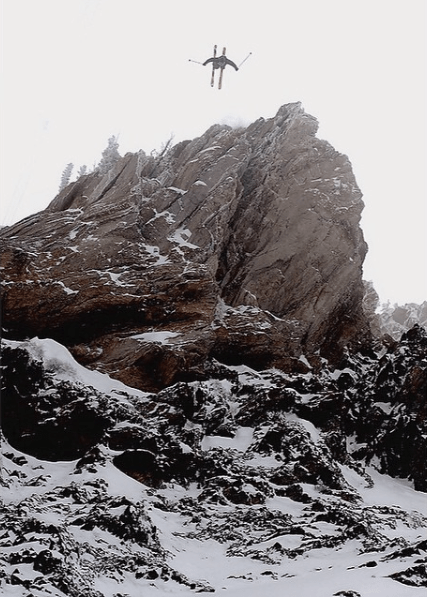
There might not be an activity in the world I love more than skiing. The coldsmoke burn in my nostrils, scent akin to campfires distilled through crisp mountain air. The enlivening chill of bluebird days spread in the wake of deep-snow storms where the sun burns cold and bright. The incomparable rush of bending a turn against the fall line, caressing mountainous curves with sharpened steel, catching that next transition just right and feeling gravity loosen its grip for a moment, a sensation worthy of a mighty, spontaneous yawp released from a well deep in your gut reserved for expressions of perfect joy and freedom.
But skiing isn’t free. It’s signature, weightless rush is pricier than a gram of blow, or so I’m told by those who prefer the euphemistic flavor of snow. For all intents and purposes, skiing is my drug of choice; the metaphor holds even if my sources are misinformed. I hope it isn’t coincidence (and I worry that it is) that my favorite activity is one of the most privilege-evidencing, lily-white sports on the planet, pretty much the most expensive and white individual diversion that doesn’t involve polo horses, boating, or driving race cars.
If, as F. Scott Fitzgerald said, the sign of good intellect is the ability to hold two conflicting ideas in your mind at one time, then a privileged intellect is one that can reflect on the absurd contrasts of its world and still indulge, without contradiction or hesitation, in those pleasures available to the privileged class. But, it is not enough for me to care or think or write about rampant inequality, writing being nothing more than my preferred way of thinking. Caring/thinking/writing is worth no praise if no meaningful action follows from sentiments or words. Real talk: I need to do something different to be a truly good, magnanimous man.
But action would require a degree of restraint to forgo privilege and say no to that next tempting pleasure in favor of doing something good for someone other than me: To say, “Yes I’m going to volunteer the next four weekends and not go skiing. No, I’m not going to buy new ski boots and Yes! I’ll donate that money to an Oakland homeless shelter.” To commit and follow through to do more than write about inequality; to get out “there” and redistribute some of my unearned privilege through sweat equity, donations, time, a bowl of soup for the next homeless person I meet, a kind word and offer of help to the next fellow human in need. Something. Anything. The particulars don’t particularly matter.
The rub is, it’s so damned easy for me to not care. And not caring becomes increasingly easy as your status in life improves, as you gain access to more intense, effective pleasures and diversions. Excuses that sound so feeble on paper or in conversation, “I don’t have enough time. Maybe next year I’ll volunteer. I need these boots. They will make me a better skier. My feet will hurt less”, remain insidiously persuasive in our interior monologues, sneaking into the default hum our minds revert to after periods of insistent, focused contemplation. The more you can afford it, the easier it is to take it; to give in to the sweet shortcuts and diversions privilege affords; to forgo the strenuous climb, ride the lift, and take the easy way down and out to moral desuetude.
I don’t know if I’ll ever get any further than reflecting on the ridiculous privilege of my position in life. I know I’m not a better person for writing these words or thinking these thoughts. If I had enough stomach left to keep ruminating, I would argue that I’m an even worse person for being aware of the gulf separating me from my less fortunate neighbors. My awareness of the situation confers responsibility and begs action. If I was simply ignorant, inaction would be more forgivable.
My return flight landed in Oakland last Sunday night. I was still high on the thrill of the trip: six fresh champagne inches each night and bluebird skies each day. Immaculate, linked turns slashed through pillow white drifts, shimmering wake cast against the naked sun. Rounds of heady apres ski draughts well earned after hard, unflagging days charging the mountain. Further rounds, not earned or necessary, but what usually follows when you drink during the day.
My flight went quick. I slugged back a few bloody mary’s and slept most of the way. After landing and deplaning, I trudged to the baggage claim anticipating a long wait for my oversized luggage. The Delta baggage handlers were on their game that night; my ski bag was waiting for me. I slung it up over my shoulder and headed out of the airport to the OAK BART connection, not that long of a walk, but tiring enough with stiff legs, wobbly after three days of hard skiing. The trip from OAK to my MacArthur stop was typically uneventful, sparse, drowsy travelers and random folks catching a ride up the East Bay.
Train doors whooshed shut behind my long, trailing bag. I rode the escalator down from the platform and walked out through the exit turnstile, its small LED screen confirming enough fare on my Clipper card to cover my commute for the next two weeks. A young woman I’d seen a few times before stood just outside the exit clutching a cardboard sign begging for food in big block letters carefully traced in Sharpie ink. A scruffy, dirty couple pushed a rickety shopping cart filled with garbage bags and salvaged cans, their load click-clacking across the seams in the tiled sidewalk. The scene barely registered in my pleasure-blind mind, hazed with the fading glow of a memorable trip.
I began the autopilot hike home, a 10ish minute walk East on 40th, pleasant on a dry Bay Area winter evening, quiet but for a few passing cars and cyclists heading home, sharing the right lane, guided to warm homes by headlight beams and bike lamps. I reached my apartment and chucked my gear in the garage, hiked up to my 3rd floor corner apartment and consummated a much needed reunion with my beloved couch. I haven’t seen the man since.
 Dead On